

Insight
Visual UI and design systems
Figma AI, design systems, and the death of the manual handoff
Generation drafts. The library is the source of truth. The annotated handoff is optional.


The bottleneck in product design is no longer drawing screens. Figma has put generation inside the file, design systems are the only thing that still scales, and the old annotated-PDF handoff is optional in a growing number of teams. This is a buyer’s guide for people asking for a UX agency UK that can govern integrity when design and code move at five times last year’s speed.
If your team is generating components and copy in the same afternoon, the risk is not “AI in the toolkit.” The risk is five sources of truth and no owner.
What actually changed
Late June 2026, Figma’s Config cycle made the direction obvious: design layers that can become live, editable code, kept in sync in the same file. Early July, that stopped being a keynote slide and started being something teams could request as early access. Adobe and others are doing the equivalent for production pipelines: saved workflows instead of a senior designer’s checklist.
The manual handoff (mark-up, redlines, “please rebuild this from the screenshot”) was always a translation tax. That tax is collapsing. What does not collapse is whether the thing being generated is the right thing, for the right user, in a system the next person can extend.
| Old bottleneck | New bottleneck |
|---|---|
| Drawing enough screens | Deciding what must be true in every screen |
| Waiting on a developer rebuild | Drift between generated variants |
| Spec documents | Who owns tokens, components, and exceptions |
| One designer, one file | Many generators, one product |
A digital marketing agency that does SEO and AI search will not fix this. Citations and campaigns need a site that is consistent enough to quote. That consistency is a design-system problem first.
Design systems are the source of truth now
A design system is not a PDF of colours. It is the reusable parts, patterns, and rules that stop a product falling apart when more people, more features, and more AI output hit the file.
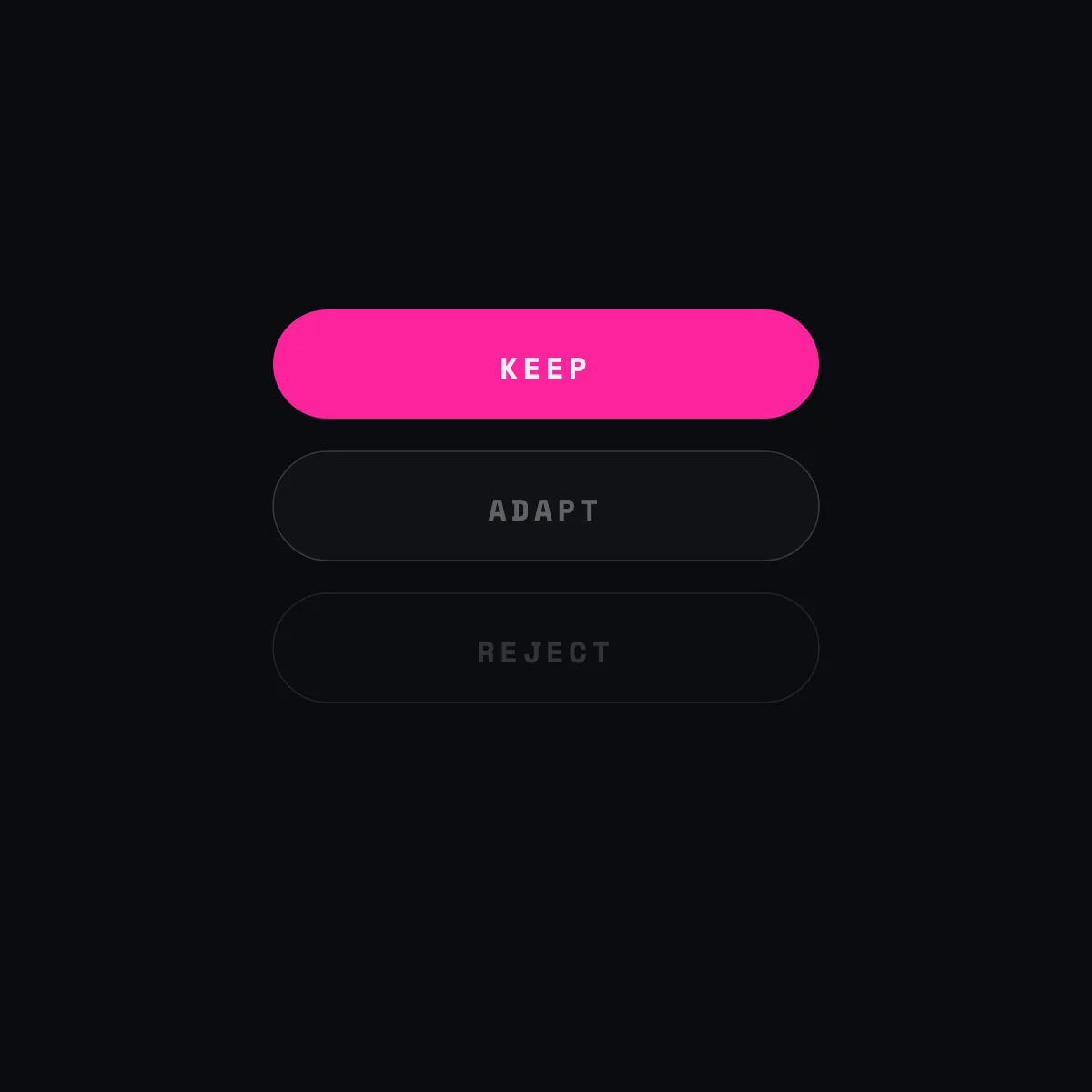
Without it, native Figma AI (or any generator) will invent a plausible button every time. With it, generation is a draft against a library: keep, adapt, or reject.
| If you have | You can |
|---|---|
| Tokens and components with names | Generate without starting from zero |
| Documented exceptions | Say no to a pretty one-off |
| A path into code | Avoid a second, shadow UI in the repo |
| An owner | Change the system on purpose, not by accident |
Visual UI and design systems is that work. DesignOps and front-end collaboration is how it survives contact with engineering. Neither is a plugin you toggle on.
What “death of the manual handoff” does not mean
It does not mean designers stop thinking. It does not mean engineering is optional. It means the expensive translation step is no longer the default, so the remaining cost is judgement: intent, accessibility, and what the system must never do.
Teams that skip the system and “just generate” recreate the vibe-coding trap inside Figma: fast, pretty, and unmaintainable. We wrote about that failure mode separately.
How to evaluate a UX partner in this market
Look for:
| You should hear | Walk away if you hear |
|---|---|
| How they will keep one library as the source of truth | “We will AI the screens and hand over files” |
| How exceptions get decided and recorded | A unique layout for every campaign page |
| How design and code stay aligned after week one | Handoff as a zip of screenshots |
| Who owns accessibility in the system | “The model is pretty good at that now” |
A boutique should be able to use the new speed and still ship something a B2B team can run. That is senior UX, not a Figma seat with a chatbot.
Frequently asked questions
Do we still need designers if Figma can generate components?
Yes. Generation drafts. Designers (or a fractional lead) decide what enters the system. Without that, you have a folder, not a product.
Is the annotated handoff dead?
It is optional more often than it was. Use it when the problem is genuinely new. Do not use it as the weekly process if the file and the code can stay in sync.
How does this relate to SEO and AI search?
Engines and buyers both punish inconsistency. A site with five visual dialects is harder to trust and harder to cite. System first, then digital marketing.
Can a small UK team do this without a full design org?
Yes, with a senior pair of hands and a small library, not a 400-component theatre. Start with the few parts you actually reuse.
What should we do this quarter?
Name an owner. Inventory what is already a component. Pick one product surface and stop generating one-offs on it. Then decide whether you need a partner to hold the system.
Next step
The short version: the handoff tax is falling; the cost of an ungoverned design file is rising. The variable is whether you have a source of truth before you turn the generators up.
Do not buy more seats to draw faster. Spend the first money on the library, the owner, and the path into code.
Book a free call and you will speak to Jonathan Porter, not a salesperson. If you would rather start in writing, ask a question and we will reply within four working hours. No obligation. No hard sell.
Related reading
- Visual UI and design systems: the library that generation has to obey.
- DesignOps and front-end collaboration: keeping design and engineering on one truth.
- The vibe coding trap: why a pretty generated UI is not a product.
Evidence last reviewed July 2026. Config / Code Layers timing follows public Figma announcements in late June and early July 2026.